Whitman, as Printed

Methods

Footnotes

Where we changed a picture or made a choice you might wonder about, we say here what we did and why, with the before and after and the sources.

A small numbered mark on a page opens its footnote there. Each footnote has its own address on this page.

Walt Whitman: The Book

#The gold on the 1855 cover

On The Book’s cover · The Poems’ World · Whitman, as printed: 1855 · 1 November 2026

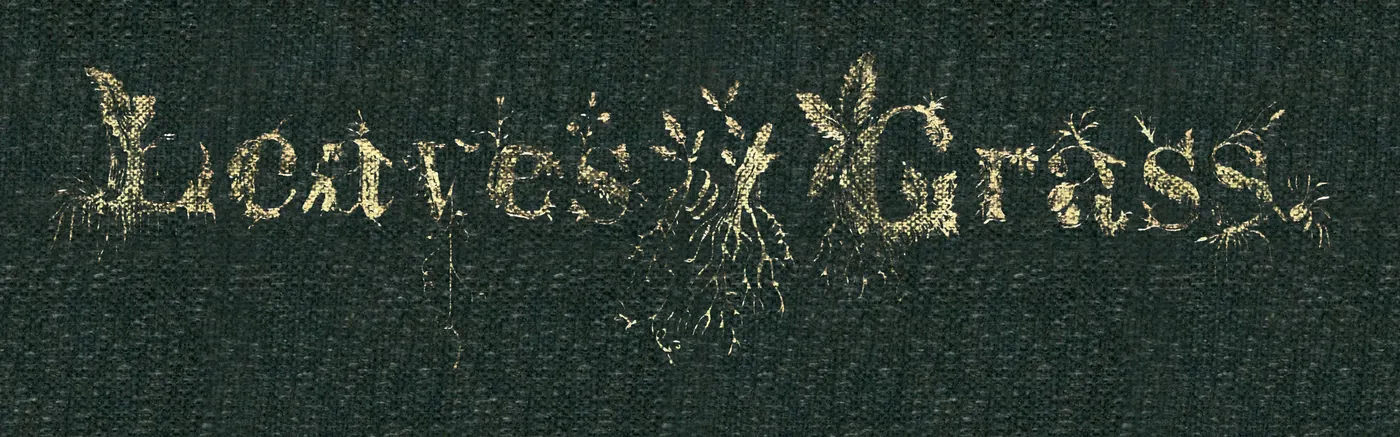
Under the library’s lights, the gold photographed as a dark bronze. We brightened it to match the gold rules around this cover, and kept its grain and worn spots.
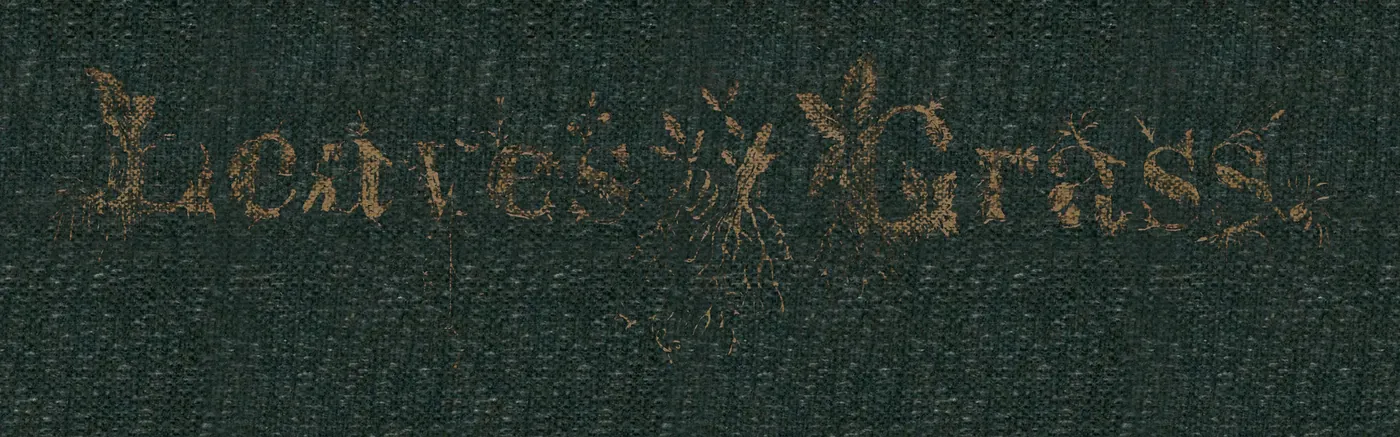
The cover’s gold lettering, Leaves of Grass, on its dark green cloth: as photographed, a dark bronze; as shown, brightened to a pale gold
Drag across the picture to compare: as photographed at left, as shown at right.

What we did

We brightened the gold lettering on the cover of the Boston Public Library’s copy of the first Leaves of Grass. Each color was raised in the same proportion, so the cloth’s grain showing through the gold, and the places where the gold has worn away, stay as they were.

Why

Gold photographs as dark or as light as the lamp makes it. Under the Boston library’s lights the lettering came out a dark bronze. The Library of Congress’s copy of the same cover, which these pages showed until 1 November 2026, came out pale. The cover is framed by three rules stamped in gold;3 our pages draw that frame in a flat gold, and beside it the lettering as photographed looked darker than its own frame. We brought the lettering to the frame’s gold.

What we weighed

Two ways: show the gold as photographed, darker than the rules around it, or brighten it and say so, in the caption and here. We chose to brighten it.

What we don’t know

The gold our pages draw the rules in was chosen for the pages, not measured from a book. We haven’t seen the Boston copy itself, so we can’t say which photograph is closer to the cover in daylight. Brightening also takes some detail from the brightest grains: under a tenth of the gold’s pixels reach full brightness in one color or more.

Detail
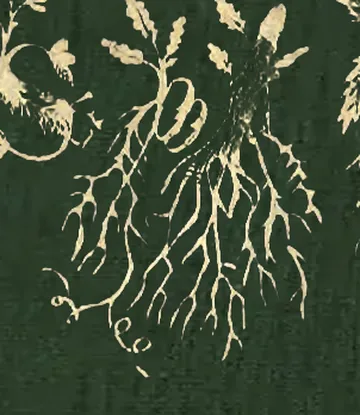
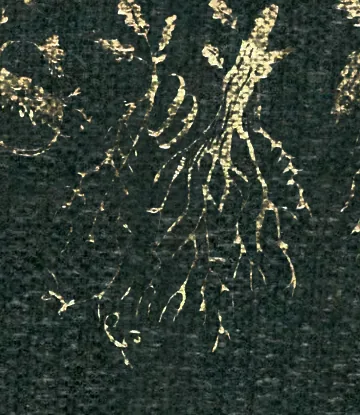
The Library of Congress’s copy, its gold as photographed, its faded cloth toned back to green: shown here until 1 November 2026
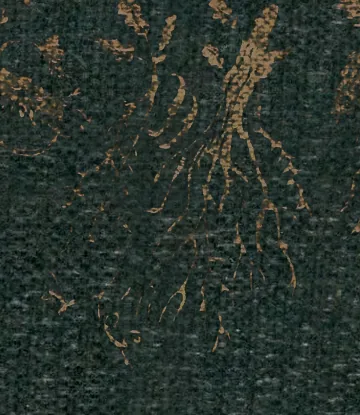
The Boston copy, as photographed
The Boston copy, as shown
How it was done, for checking

Each color multiplied so that the median color under the letters, #7c6142 as photographed, becomes #d9c690, the drawn rules’ gold: red by 1.75, green by 2.04, blue by 2.18.

Sources

  1. The Boston Public Library, Leaves of Grass (Brooklyn, 1855), RARE BKS f.Whitman.10.1A, its front cover; “No Copyright - United States.” https://www.digitalcommonwealth.org/search/commonwealth:bz60p396s
  2. The Library of Congress, Leaves of Grass (Brooklyn, 1855), Feinberg-Whitman Collection, PS3201 1855, copy 3, its front cover. https://www.loc.gov/item/03023679/
  3. E. Folsom, Whitman Making Books / Books Making Whitman (2005), the first binding: “a goldstamped triple-rule frame,” per the Walt Whitman Archive’s copy. https://web.archive.org/web/20210415140402/https://whitmanarchive.org/criticism/current/anc.00150.html

Whitman, as printed: the 1860 book

#Without Whitman’s permission

On Whitman, as printed: the 1860 book · 1 November 2026

Whitman refused Worthington’s offer for the plates in 1879 and forbade their use. In 1880 he asked Richard Watson Gilder whether he could “injunct Worthington or something?” He never went to court, and between 1880 and 1885 he accepted $143.50 in royalties on the printing’s sales, “on account, as royalty,” he said, without granting the right to print. In 1888 he called Worthington “a publisherial freebooter.”

Sources

  1. Whitman to Richard Watson Gilder, November 26, 1880, with his statement of the same date: the Walt Whitman Archive, hyb.00015. https://whitmanarchive.org/item/hyb.00015
  2. Horace Traubel, With Walt Whitman in Camden, vol. 1 (Boston: Small, Maynard, 1906), pp. 195, 250–51; the University of Toronto’s copy at the Internet Archive. https://archive.org/details/withwaltwhitmani01trauuoft
  3. Edwin Haviland Miller, ed., Walt Whitman: The Correspondence, vol. 3 (New York University Press), his note to the letter to Gilder: the payments from Whitman’s Commonplace Book, $143.50 in all; as the Walt Whitman Archive carries it (hyb.00015_n1). https://github.com/whitmanarchive/whitman-correspondence/blob/0961a202320498be56f81a155e47707bbdeb20f5/source/annotations/notes.xml
  4. Ed Folsom, Whitman Making Books / Books Making Whitman (2005), the Walt Whitman Archive, through the Wayback Machine. https://web.archive.org/web/20210415140402/https://whitmanarchive.org/criticism/current/anc.00150.html